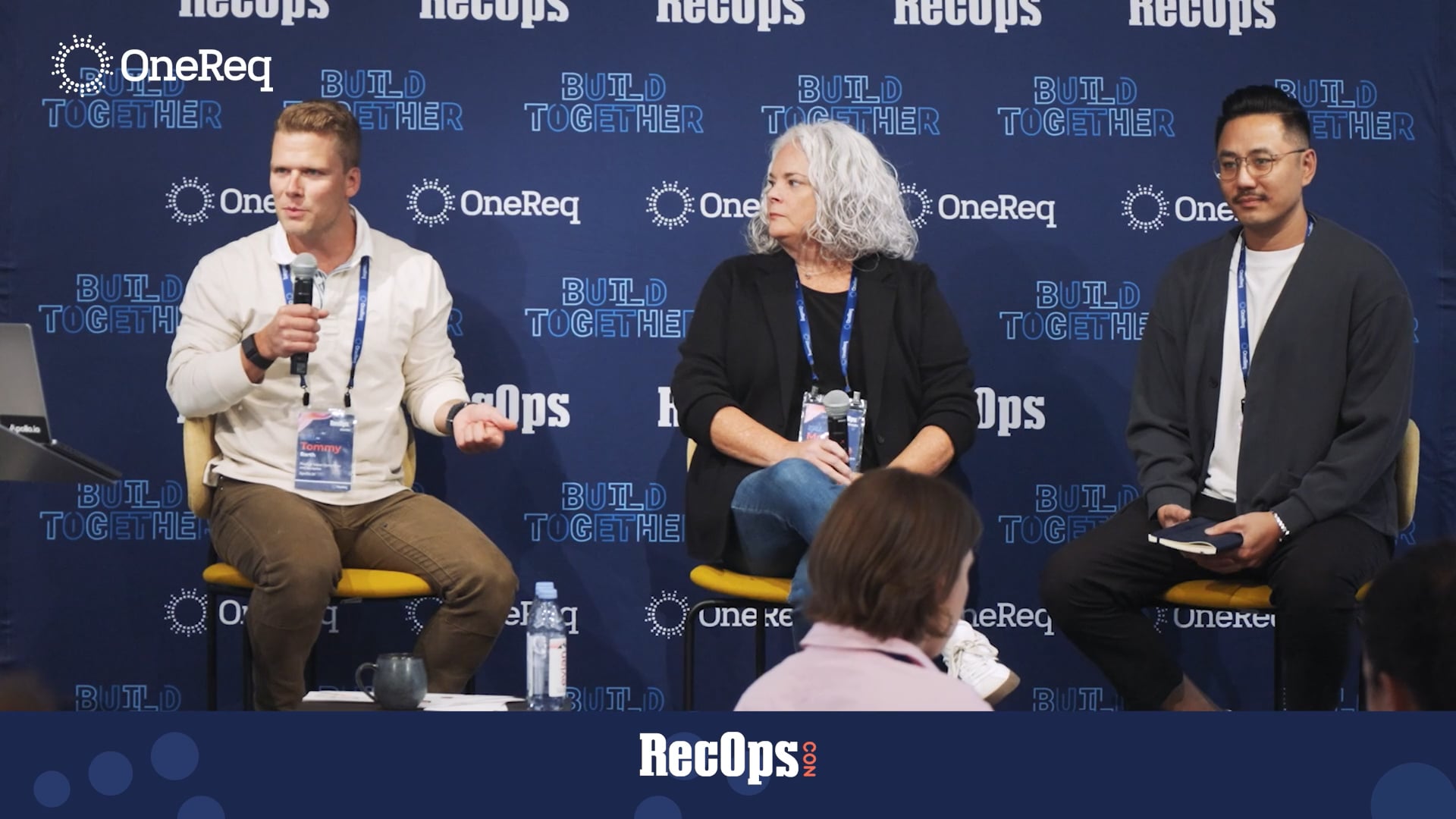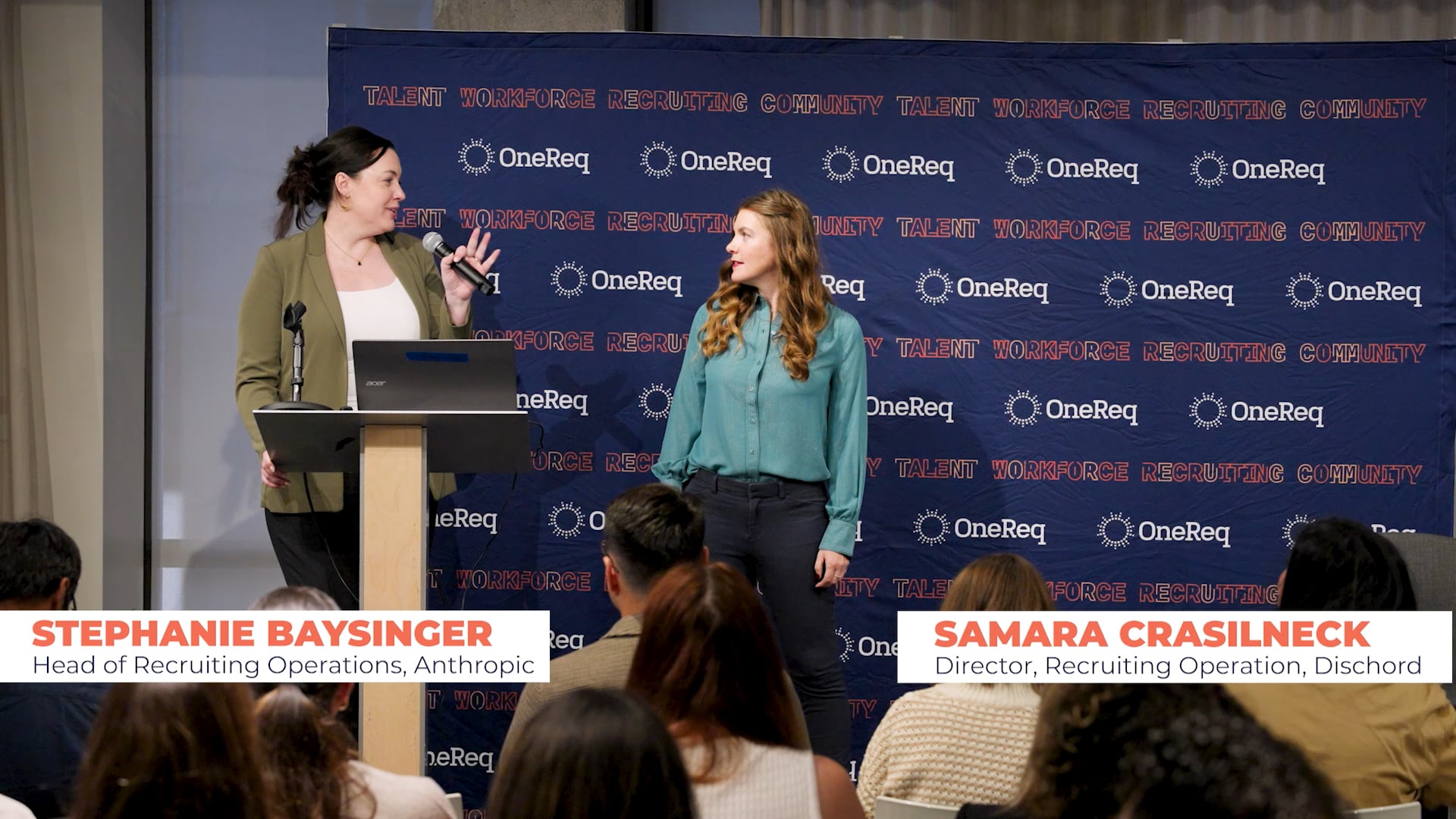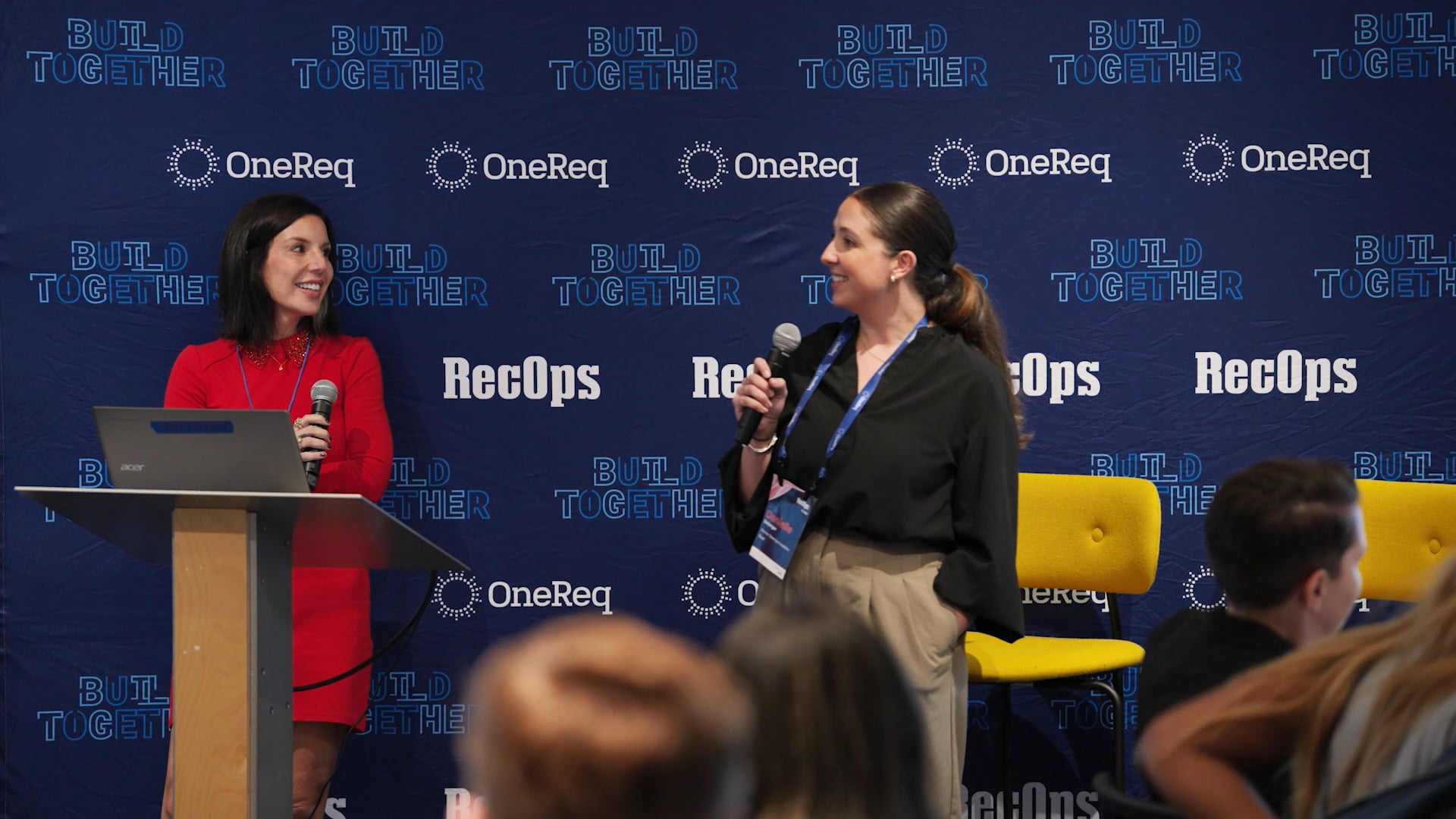


Connor Carion leads talent operations at Render. He started as an agency recruiter, became Webflow’s first talent ops hire, moved into FP&A as a finance business partner, then came back to talent ops. In this fireside chat with Juicebox co-founder and CEO David Paffenholz, he explained what a year in finance taught him about running recruiting ops.
Speak finance’s language. Recruiters avoid predicting the future because candidates are unpredictable. Finance’s whole job is predicting it, and their core KPI is forecast accuracy. Bring a forecast that’s directionally right, and flag misses early. Nobody in FP&A wants to find out at quarter close.
Own all 3 thirds of hiring. Most recruiting teams own only the middle: everything inside the ATS. The first third is planning, meaning knowing what each hire will build and whether you have the capacity to deliver it. The last third is after the start date: checking that interview signals matched on-the-job performance, and that your pitch matched reality.
Talent ops as chief of staff. The head of talent is the team’s CEO. Talent ops takes ambiguous problems, decides whether the fix is training, tooling or headcount, and drives it to done.
Treat capacity planning as a negotiation. When the business wants 100 hires in Q1, come with options: spread them across quarters, or fund the agency, headcount or tool needed to hit Q1.
Build vs. buy. Vibe-coded prototypes often get stuck before hosting and SSO. Render bought Juicebox for sourcing and was live in under 2 weeks. It built what depends on its own data: a RecOS companion to the ATS, and a tool that checks interviewer feedback and transcripts against Render’s hiring bar.
His ideal talent ops team has 3 tracks: a recruiting program manager, a systems admin who partners with finance, and a talent engineer.