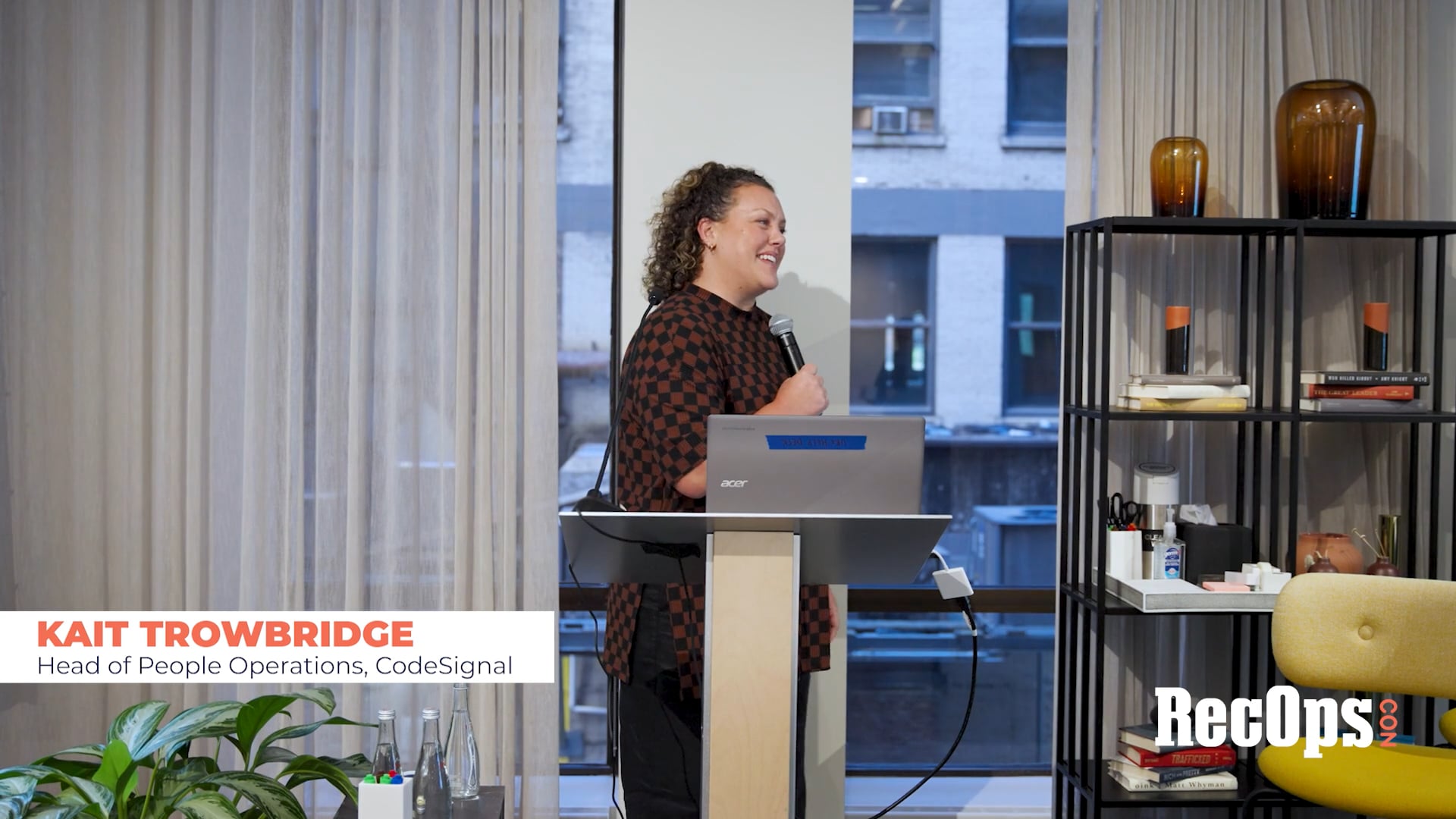

Valerie Keller leads customer experience at CodeSignal, after earlier roles in early talent, recruitment marketing and the ATS world. Her session tackled a problem every recruiting team feels: AI helps candidates apply faster, so there are more applications than ever, and they all look polished.
The resume is a weaker signal. She estimated that 80% or more of candidates use AI at least to match their resumes to job descriptions. Experienced and newer candidates now look equally strong on paper, so recruiters spend more time sifting and second-guessing.
Invite candidates in, don’t filter them out. An assessment at the top of the funnel lets eligible candidates show what they can do, and it separates people who want the job from people mass-applying with AI. For niche, hard-to-fill roles, move validation later, but do it before the offer.
Be upfront. Tell candidates how long it takes and what skills it measures, offer practice and a way to reach a person, and say clearly whether they can use AI. Increasingly, teams want to see how candidates use AI, since they’ll use it on the job.
Validate, don’t infer. Conversation, writing, spreadsheet, whiteboard and coding simulations each show how someone works instead of what they claim. She shared a CodeSignal customer example: when given the choice at Zillow, almost 80% of applicants picked the AI interviewer.
Keep humans in the decision. Scores and summaries are a strong signal, not a verdict. She once hired someone below the threshold after listening to the assessment, and that hire is doing well.
Her playbook: map your current filters, write a clear AI policy for candidates, pilot with 1 role or team, and keep checking that scores predict on-the-job performance.