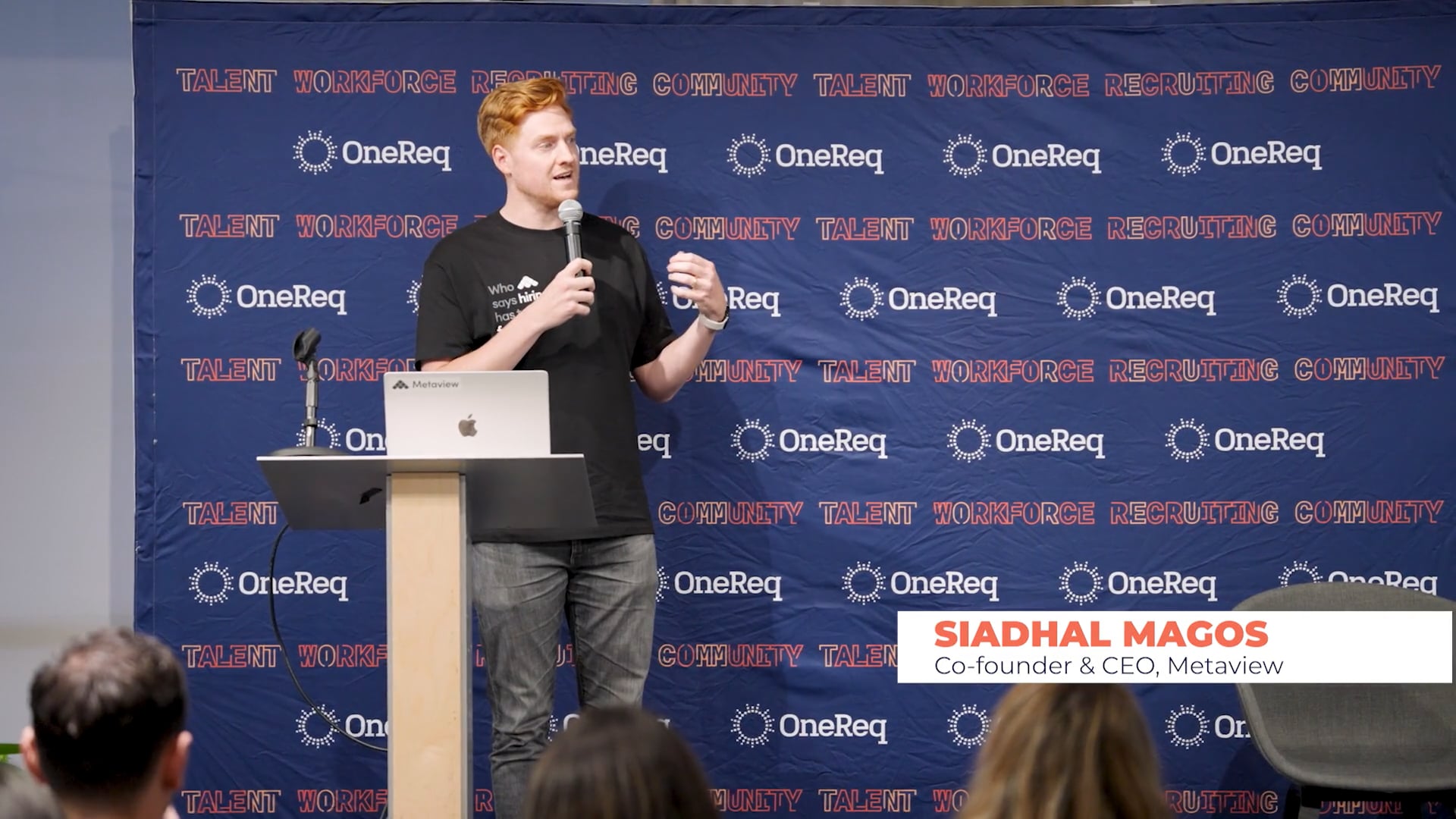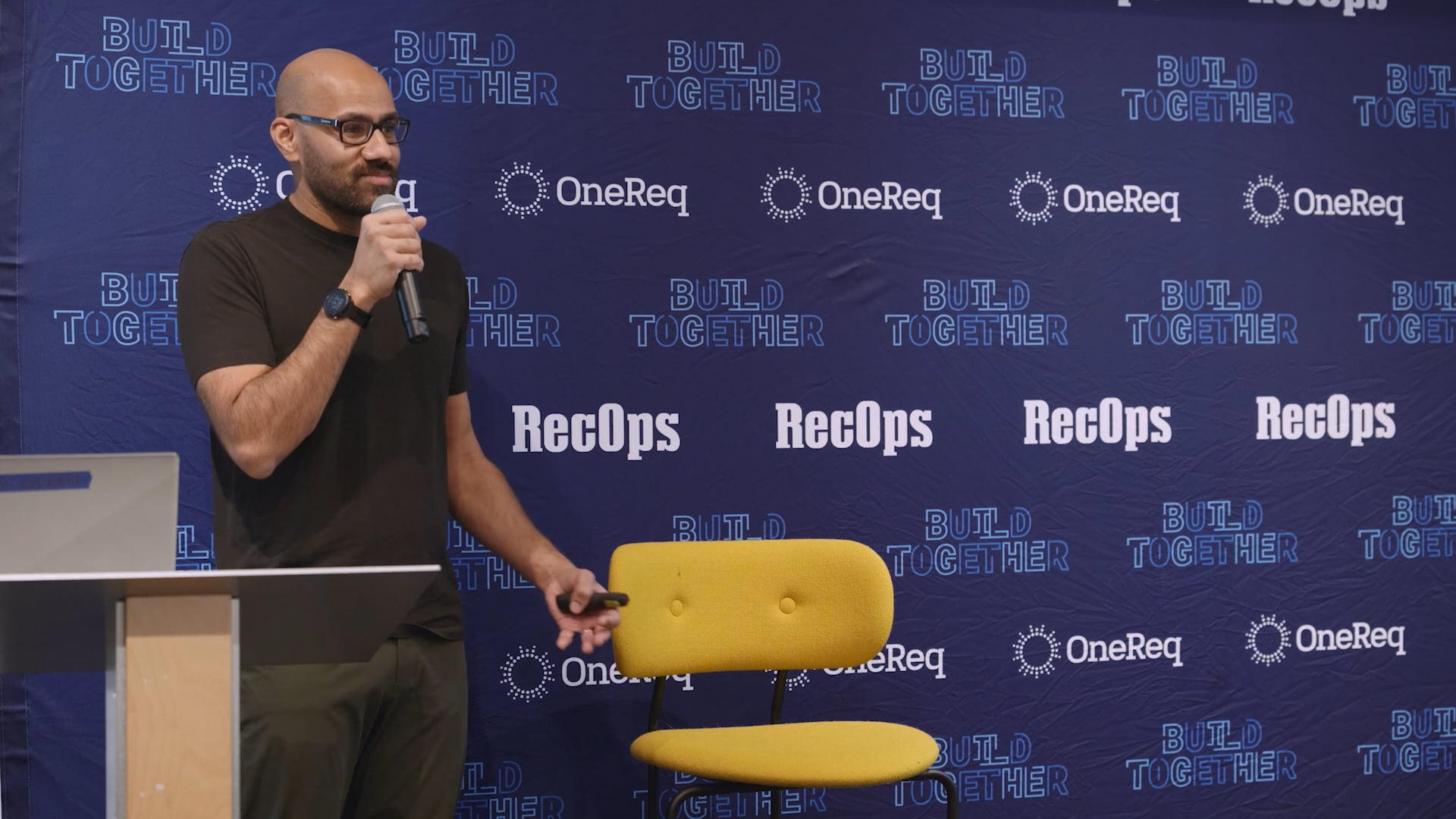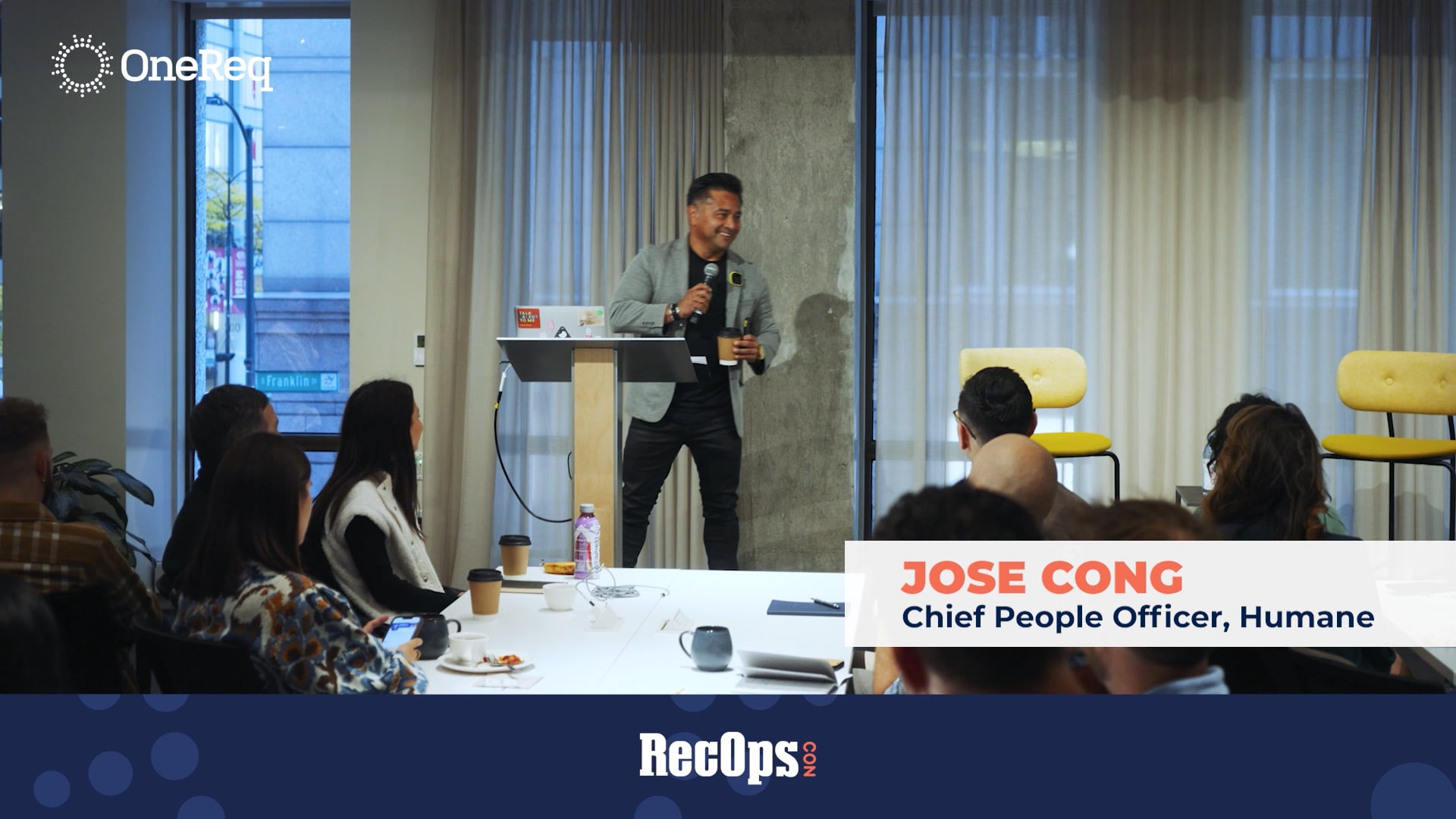

A good share of the room raised their hands as teams of one. On stage were 3 more: Jackie Bycinthe, the only RecOps person at Tides, a nonprofit; Maia Miller, founding talent ops manager at Teamworks; and Emily Paik, who owns recruiting, recruiting ops, onboarding, employer brand, HR and people ops by herself at Kit, a 100-person company.
AI cuts both ways. Emily says AI let her scale herself in a way she never thought possible. She has 10 to 20 recruiting systems running while she’s at the conference. (She also once had to rotate 100 API keys overnight.) Maia has built tools like an internal headcount tracker, but now that building is easy, everyone wants everything, and she has to be the guardrail. At Tides, Jackie is still making the case for access to AI at all.
Community fills the gap. When a RIF made Jackie a team of one mid-ATS implementation, she leaned on people she’d met at RecOps Con. Maia has come every year and keeps those relationships going between conferences. Emily found her people by posting on LinkedIn 2 or 3 times a week. Their shared advice: follow up after you meet someone, and offer help before you need it.
The skills nobody mentions. Curiosity, and the discipline to say “not yet.” Emily’s hot take: building isn’t the hard part. Spotting the real bottleneck is. She calls it bottleneck thinking vs. productivity thinking. Maia added project management, the language that gets leadership to trust your decisions.
Handling decision fatigue. Prioritize by who a task affects (Jackie starts with candidates), know how much autonomy your manager has given you, and use a decision-making framework so you can gather input fast and still own the call. Emily recommended the book People Ops as a Product.
On imposter syndrome: nobody fully knows what they’re doing. Start with “in my experience,” and share anyway.